What is a Micro Podcast? The Private Audio Format Taking Over Group Chats
Published on March 25, 2026

Somewhere between a podcast and a group chat, there's a format that's gaining traction: the micro podcast. It's audio-first, private, and built for small groups rather than mass audiences.
Defining the Micro Podcast
A micro podcast is exactly what it sounds like: a podcast, but smaller. Instead of broadcasting to thousands of strangers, it's shared with a handful of people who actually know each other.
The format borrows what works from traditional podcasting (voice, storytelling, asynchronous listening) and applies it to personal relationships. Think of it as a podcast where the audience is your family, your friend group, or your team.
There's no RSS feed. No public directory. No download numbers to track. Just a private audio conversation between people who were specifically invited.
Why Audio Instead of Text?
Group chats have a problem. Messages pile up fast. Context gets lost. Tone is impossible to read. By the time you catch up on 47 unread messages, you've forgotten what the conversation was even about.
Voice solves most of this.
When someone speaks, you hear their tone. You catch the excitement, the hesitation, the joke they almost didn't make. A two-minute voice message can convey more than a dozen texts, and it takes less effort to send.
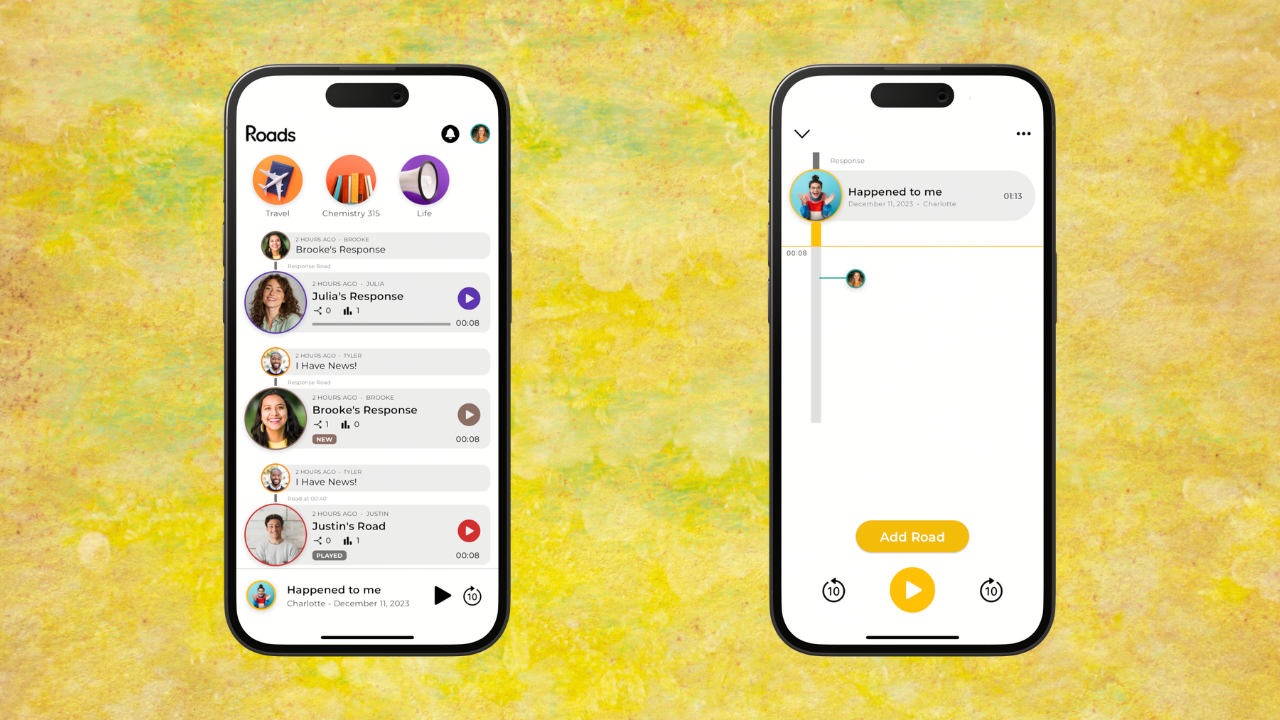
Micro podcasts take this further by adding structure. Instead of scattered voice notes in a chat thread, messages are organized in a timeline. Replies stay connected to what they're responding to. Conversations build on each other rather than getting buried.
How Micro Podcasts Work
The format is simple:
Someone starts a channel. This is the container for the conversations. It might be a family updates channel, a book club discussion, or college friends staying in touch.
People are invited. Only those with an invite can access the channel. There's no public listing, no algorithm suggesting it to strangers.
Members record when they have time. No scheduling required. Someone shares an update on Monday morning. Someone else listens and responds Tuesday night. The conversation moves at whatever pace works for the group.
Listeners catch up on their own schedule. Messages don't disappear. There's no pressure to respond immediately. People listen when they have a quiet moment, whether that's during a commute, a walk, or while doing dishes.
Who Uses Micro Podcasts?
The format works for any group that wants to stay connected but can't (or doesn't want to) be on a call at the same time.
Families spread across time zones. Parents sharing updates with adult children. Siblings who live in different cities. Grandparents who want to hear more than a weekly phone call but don't need real-time availability.
Friend groups that drifted apart. The college crew that used to hang out every weekend. The work friends who moved to different companies. People who still care about each other but don't have time for scheduled calls.
Small communities with shared interests. A book club discussing chapters between meetings. A running group sharing training updates. Hobbyists talking through projects at their own pace.
Remote teams. Async standups without another meeting. Project updates that teammates can listen to when it's convenient. A way to hear voices without requiring everyone to be online at once.
Micro Podcasts vs. Traditional Podcasts
Traditional podcasts are one-to-many. A host (or hosts) produces content for an audience of strangers. Success is measured in downloads, subscribers, and reach.
Micro podcasts flip this. They're many-to-many within a closed group. Everyone can speak. Everyone can listen. Success is measured in how connected the group feels, not how large it grows.
There's no production pressure. No need for intro music, perfect audio quality, or edited segments. It's just people talking to each other, recorded so others can listen when they have time.
Micro Podcasts vs. Voice Notes
Voice messages in apps like iMessage or WhatsApp are great for quick back-and-forth. But they're designed for two-person conversations and short exchanges.
Micro podcasts are built for groups and longer conversations. Messages stay organized over days or weeks. Threaded replies keep context intact. Timestamped comments let people respond to specific moments without confusion.
The result is closer to an ongoing discussion than a string of disconnected voice notes.

Getting Started
Starting a micro podcast doesn't require any equipment, editing software, or technical knowledge. All it takes is a phone and something to say.
Roads Audio is built for this format. Create a channel, invite the people you want included, and start talking. Messages are organized automatically. Replies stay threaded. Everyone listens and responds on their own time.
For a step-by-step guide, check out how to start a private micro podcast.
A Different Way to Stay Close
Micro podcasts aren't trying to replace traditional podcasts or group chats. They fill a different need: staying connected with people who matter, through voice, without requiring everyone to be available at the same time.
For groups tired of scheduling calls that never happen or scrolling through text threads that lost the plot, micro podcasts offer a middle ground. Real voices. Flexible timing. Conversations that actually feel like conversations.
Try Roads Audio Free Today
Start your own micro podcast with the people who matter most. Create a channel, invite your group, and start talking. No editing, no publishing, no strangers.