How to Stay Connected with Long Distance Family
Published on April 16, 2026

Families don't live in the same town anymore. Siblings scatter for jobs. Parents retire somewhere warm. Kids grow up and move across the country. The physical distance is real, but it doesn't have to mean growing apart.
Why Staying Close Gets Harder
It's not that people stop caring. Life just gets busy, and the small moments that keep relationships alive become harder to share when you're not in the same place.
Phone calls require scheduling. Texts feel impersonal for anything beyond logistics. Group chats fill up with noise until everyone mutes them. Video calls turn into events that need to be planned weeks in advance. The tools designed to keep people connected often feel like obligations instead of connections.
Meanwhile, the everyday stuff goes unshared. The funny thing that happened at work. The kid's first steps. The random thought that would have been a five-minute conversation if you lived closer. These small moments are what make relationships feel real, and they're the first things to disappear when distance enters the picture.
What Actually Works
The families that stay close despite distance tend to share a few habits:
Low-friction sharing. The easier it is to share something, the more often it happens. If sending an update requires finding the right time, opening the right app, and composing the right message, it won't happen. The best systems make sharing as easy as thinking out loud.
Async by default. Not everyone is available at the same time, especially across time zones. Communication that waits for the recipient to be ready works better than communication that demands immediate attention.
Voice over text. Hearing someone's voice carries emotion that text can't replicate. A 30-second voice message can feel more connecting than a paragraph of carefully typed words. And for older family members who struggle with small keyboards, speaking is simply easier.
A dedicated space. Mixing family updates into the same chat where you coordinate logistics creates noise. Having a separate space just for sharing life updates keeps things organized and makes it easier to catch up.
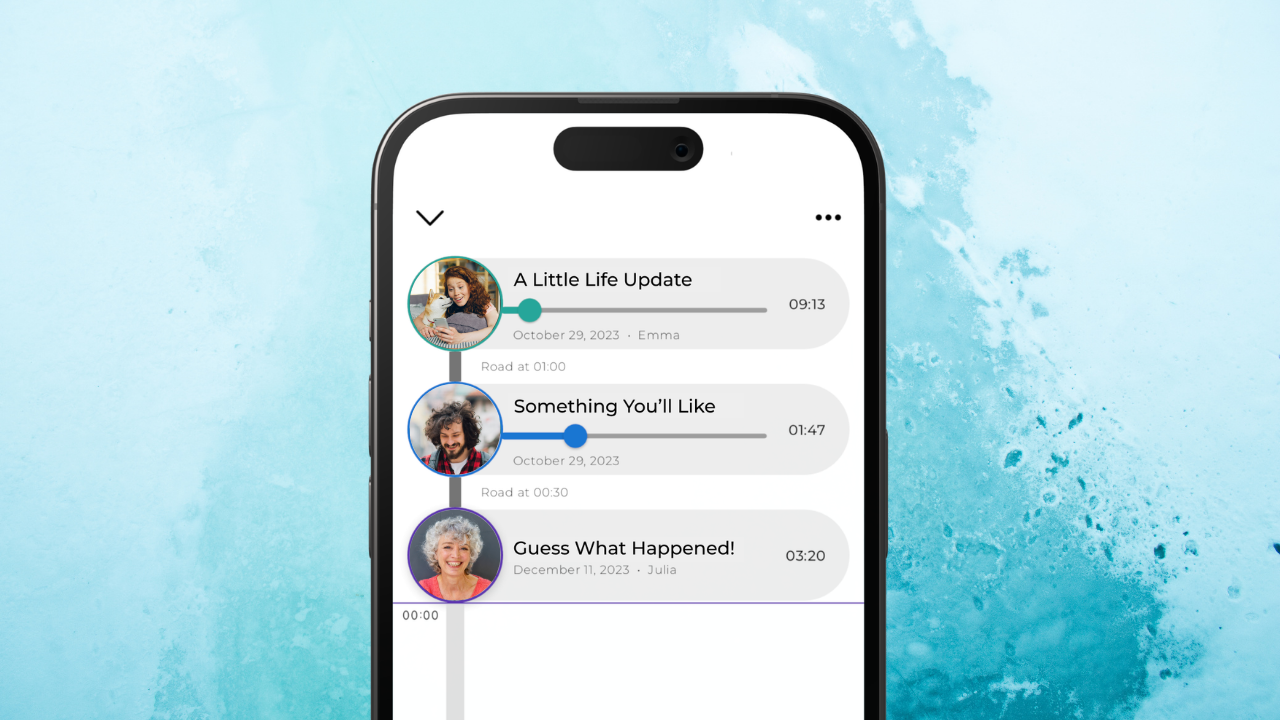
Voice Messages for Family
Voice messaging hits a sweet spot for family communication. It's personal enough to feel like a real conversation but flexible enough to work across busy schedules and time zones.
Recording a quick update while walking the dog takes seconds. Listening to what everyone's been up to during a commute turns dead time into connection time. There's no pressure to respond immediately, but the messages are there whenever someone has a moment.
For families with older members, voice removes the barrier of tiny touchscreens and autocorrect frustrations. Grandparents who rarely text often love the ability to just talk. The technology gets out of the way and lets the conversation happen.
Setting Up a Family Channel
The specifics vary by app, but the concept is simple: create a shared space where family members can drop voice updates whenever they want, and everyone else listens when they have time.
A few tips for getting started:
- Start with a small group. Getting three or four people active is easier than onboarding twelve relatives at once.
- Seed it with content. Send a few messages yourself before inviting others so there's something to listen to right away.
- Make it low-pressure. This isn't about polished updates. Random thoughts, quick hellos, and mundane life stuff all count.
- Help anyone who needs it. Some family members may need a quick walkthrough to get comfortable recording and listening.
Once a few people get in the habit, momentum builds. Hearing other family members share makes people want to share back.
Roads Audio for Families
Roads Audio is designed for exactly this kind of ongoing voice conversation. Family members create a private channel, invite whoever should be included, and start talking. Messages appear in a timeline, replies thread underneath, and everyone catches up on their own schedule.
The app works on both iPhone and Android, so different devices aren't a barrier. Recording is a single tap. Listening works during commutes, chores, or quiet moments. For families already comfortable with voice messages in other apps, the transition is intuitive.
For a guide to getting started, see how to start a private micro podcast. The same format that works for friend groups and communities works just as well for family.
Distance Doesn't Have to Mean Disconnect
The families that stay close across distance are the ones that find ways to share the small stuff. Not just birthdays and holidays, but the random Tuesday updates that would happen naturally if everyone still lived nearby.
Voice messaging makes this easier than it's ever been. No scheduling required. No typing on tiny keyboards. Just talking to the people who matter, whenever there's something worth sharing, and listening whenever there's a moment to spare.
Try Roads Audio Free Today
Create a family channel and start sharing voice updates with the people who matter most. Works across iPhone and Android, time zones, and busy schedules.