Private Voice Messaging Apps: Why Some Groups Stay Closed
Published on March 22, 2026

Not every conversation belongs on a public platform. Some groups work better when the door stays closed.
Public vs Private: Two Different Purposes
Most voice-based social apps follow the same model: post something, and anyone can find it. Discover new people. Build an audience. Join open conversations with strangers.
That works for some things. Meeting new people. Exploring communities. Broadcasting thoughts to whoever wants to listen.
But it doesn't work for everything.
Family updates don't need an audience. A group of college friends catching up doesn't need discoverability. A support group sharing personal stories doesn't need strangers dropping in.
Private voice messaging apps exist for the conversations that aren't meant to be found.
What "Private" Actually Means
On a truly private platform, there's no public feed. No algorithm surfacing content to new users. No way for someone outside the group to stumble across what's being shared.
The only people who hear what's said are the people who were specifically invited.
This changes how people communicate. When a conversation is private by design, people share differently. They're more honest. More vulnerable. More themselves. There's no performance for an audience that might be listening.
"I talk to my family differently than I'd talk on a public platform," one Roads Audio user explained. "I don't have to think about who else might hear this. It's just us."
When Private Makes Sense
Private voice messaging works best for groups where the relationships already exist:
Family. Parents and adult children. Siblings spread across different cities. Extended family who want to stay connected without scheduling calls. The conversations are ongoing, personal, and nobody else's business.
Close friends. The group chat that's been going for years. People who know each other's context and history. Conversations that reference inside jokes and shared memories.
Small communities. A book club. A hobby group. Coworkers on a specific project. People who share a purpose and want to talk without broadcasting to the world.
The common thread: these are people who already trust each other. They don't need to discover new members. They need a space to talk.
How Private Channels Work
In Roads Audio, conversations happen inside channels. A channel is created by one person, who then invites specific people to join. Only those invited can see or hear anything shared there.
There's no search. No recommendations. No way to browse public content, because there isn't any.
Within a channel, everyone can send voice messages whenever they have time. Messages stay organized in a timeline, with threaded replies keeping conversations easy to follow. Timestamped comments let people respond to specific moments without losing context.
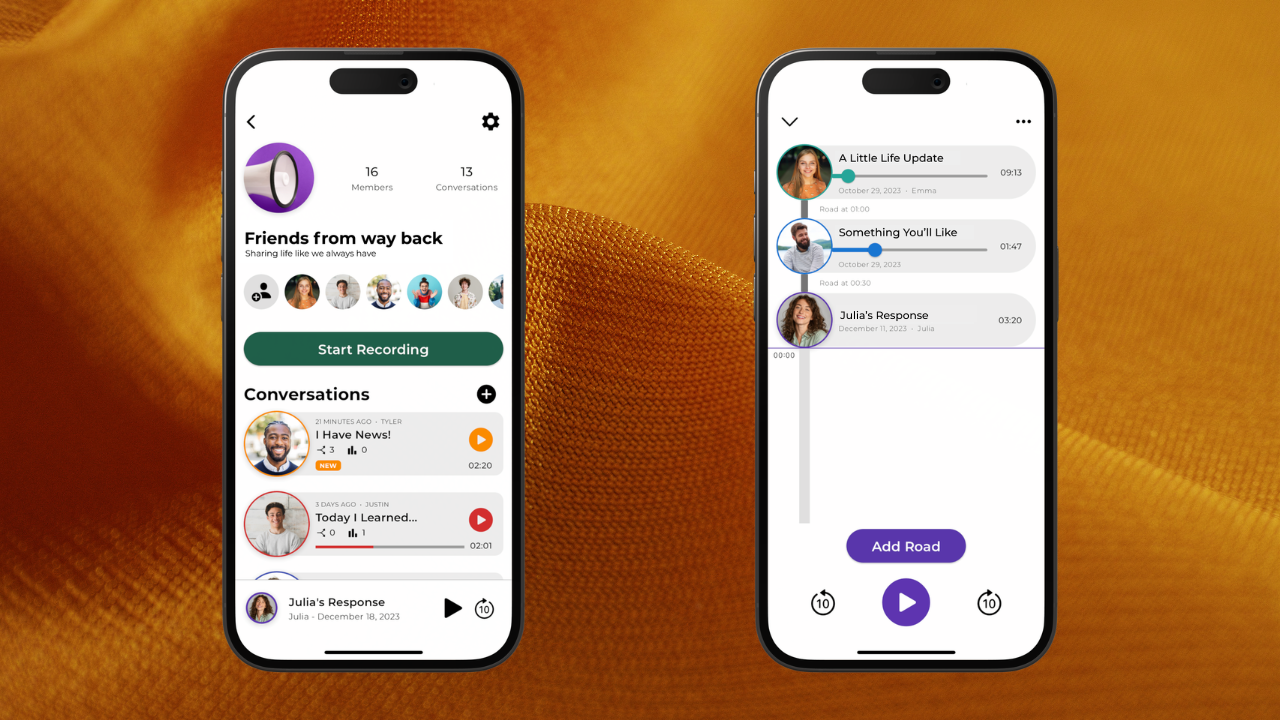
The result feels less like social media and more like a private group podcast. Updates arrive when people send them. Listeners catch up when they have time. The conversation continues at whatever pace works for the group.
Privacy Without Isolation
One concern with private platforms: does limiting access mean limiting connection?
For the use cases where private works best, the answer is no. These aren't people looking to expand their network. They're people looking to deepen existing relationships.
A family channel doesn't need new members. A close friend group isn't recruiting. The value comes from the intimacy of a closed space, not from reach or growth.
Private platforms trade scale for depth. The conversations might reach fewer people, but they tend to mean more. When everyone who joins was specifically invited, there's a baseline of trust that public platforms can't replicate.
Choosing the Right Tool
Public voice platforms serve a real purpose. Meeting new people, exploring communities, building audiences. Those are valid reasons to use them.
But when the goal is staying close to people who already matter, a private platform often fits better. No algorithm deciding what gets seen. No strangers in the conversation. Just the people you invited, talking in their own voices.
The question isn't which type of platform is better. It's which one matches what you're trying to do.
For conversations that don't need an audience, private voice messaging keeps things simple: invite the people you want, talk when you can, and know that what's shared stays between the group.
Try Roads Audio Free Today
Roads Audio is built for private voice conversations. Create a channel, invite your people, and start talking. No public feeds, no algorithms, no strangers.